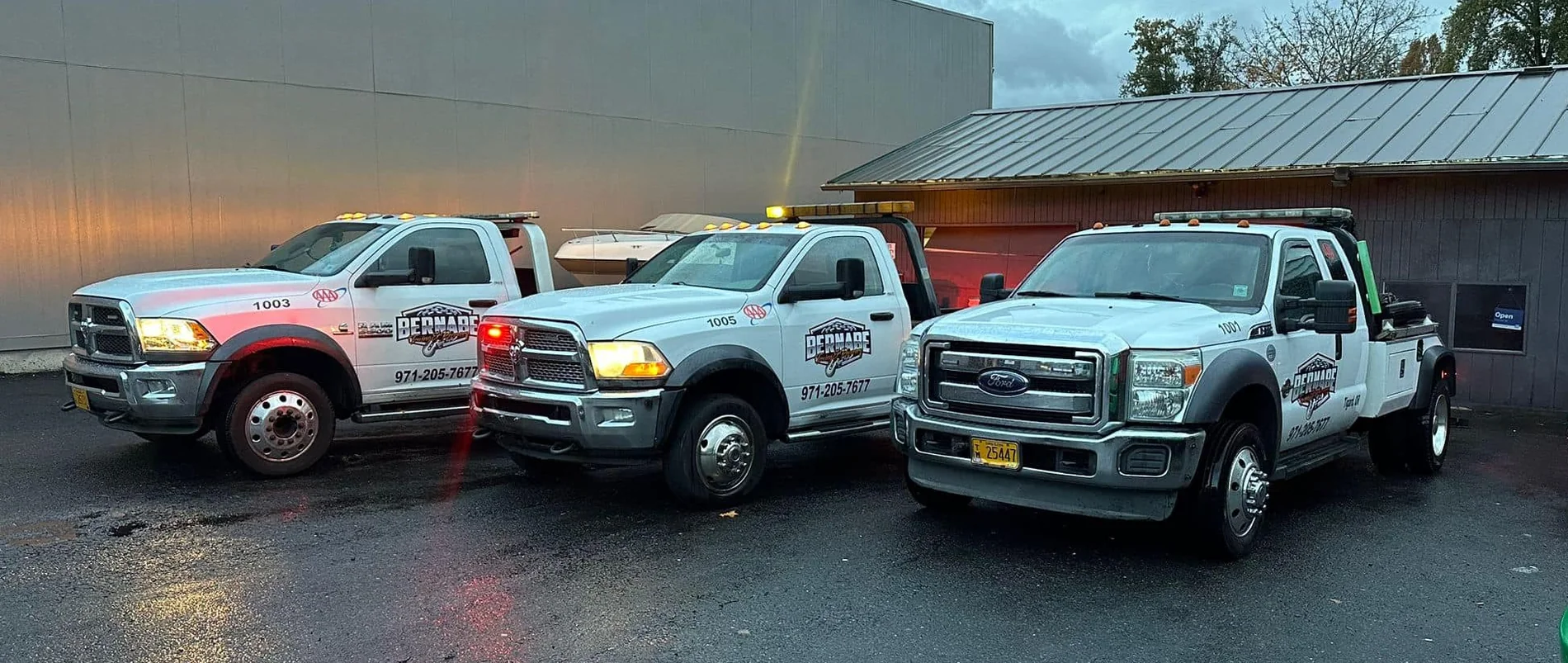
If your property is experiencing recurring unauthorized parking, visit Bernabe Towing & Recovery's Private Property Impound website to learn how our team can help you evaluate your parking enforcement needs.
Bernabe Towing & Recovery serves Wilsonville, Oregon, with private property towing solutions for apartment communities, HOAs, and commercial parking facilities.
And for property managers, it means having clear rules, reliable documentation, and a professional process when vehicle removal is necessary.
For commercial properties, it means helping customers and authorized users find parking without unnecessary obstacles.
For apartment communities, that means protecting assigned spaces and keeping access areas usable.
Parking enforcement should support the people who live, work, and visit a property.
A Better Parking Experience for Wilsonville Residents
Actual towing eligibility depends on the location, circumstances, authorization, and applicable regulations.
Our dispatch operation is available 24 hours a day, and our standard PPI arrangements include towing signage without a charge to property management.
Bernabe Towing & Recovery assists authorized property representatives in Wilsonville with private property impound services, including qualifying unauthorized parking situations, restricted-area violations, and abandoned vehicle concerns.
When a vehicle is parked without authorization and the legal requirements for removal are satisfied, a private property towing provider may be an appropriate part of the property's enforcement process.
However, some violations continue despite those efforts.
Warnings, resident communication, and better parking organization can resolve many issues.
When Professional Private Property Towing Becomes Necessary
For property managers, the objective should be predictable parking management—not simply increasing the number of vehicles removed.
Consistency matters. When similar violations receive similar treatment, residents are less likely to view enforcement as arbitrary.
It should also distinguish between ordinary complaints and situations involving blocked access or other safety concerns.
The policy should explain which spaces are assigned, how visitor parking works, whether permits are required, and whom residents should contact when a violation occurs.
Rather than relying on verbal instructions, residential communities can benefit from a short, written parking policy that residents receive when moving in.
A strong parking program starts before the first violation.
Building a Parking Policy That Residents Can Understand
For properties dealing with long-term vehicle storage problems, Bernabe Towing & Recovery can discuss the applicable private property towing process.
Property managers should determine which procedure applies before arranging removal.
Oregon law establishes specific procedures for certain abandoned vehicles on private property, including notice requirements in qualifying situations.
A vehicle should not automatically be classified as abandoned simply because it has not moved.
Is it abandoned? Does it belong to a resident who is traveling? Is it registered to someone living at the property? Does it have a mechanical problem?
A car that has remained in the same parking space for an extended period can raise questions.
What About Vehicles That Have Not Moved for Weeks?
This distinction is important when residents dispute a parking decision or ask why their vehicle was removed.
Documentation alone does not authorize towing. The removal must also meet applicable Oregon and local requirements.
Management should retain the applicable authorization and any other records required by law.
Photographs can also help establish where the vehicle was parked and which restrictions were visible.
A practical incident record may include the vehicle's license plate, make, model, color, location, observed violation, and the time the issue was identified.
Good documentation can prevent confusion later.
What Should a Property Manager Document Before Requesting a Tow?
A written enforcement procedure helps staff respond consistently, particularly when different employees manage the property during different shifts.
Properties along these corridors may experience a combination of residential, commercial, and visitor parking activity.
SW Boones Ferry Road and Wilsonville Road
Clear restrictions can help preserve spaces for their intended users.
Mixed-use properties and commercial parking facilities near Town Center Loop may need to manage customer parking, employee vehicles, delivery access, and unauthorized overnight parking.
Wilsonville Town Center
Management should distinguish private parking areas from public streets because different rules and authorities may apply.
Developments with shared streets, garages, designated spaces, and community parking areas may encounter conflicts involving visitor vehicles, parking assignments, and access restrictions.
Villebois Residential Communities
Different parts of Wilsonville present different property management needs.
Parking Enforcement Near Villebois and Wilsonville Town Center
When appropriate and legally authorized, professional vehicle removal can help restore access.
A blocked fire lane, restricted access route, or driveway should never be treated as an ordinary parking disagreement.
Managers should identify the exact location, document the obstruction, and determine which legal and property-specific procedures apply.
These situations require careful attention because they may interfere with property operations or emergency access.
Consider a vehicle stopped across a driveway entrance, a truck blocking access to a dumpster enclosure, or a car parked in an area needed by emergency vehicles.
Some parking situations create more serious concerns than an occupied stall.
When a Vehicle Blocks Access Instead of Just Taking a Space
For communities that experience repeated violations, a consistent documentation process is often more effective than responding differently to every complaint.
Rules should be communicated to residents and visitors before enforcement begins.
Enforcement: What happens when a vehicle exceeds the permitted parking period?
Overnight restrictions: Are additional requirements in place after certain hours?
Registration: Must visitors register their license plates or obtain a temporary permit?
Visitor duration: How long may a guest remain parked?
Wilsonville property managers can reduce confusion by establishing written policies addressing:
The distinction matters.
A guest who parks for several hours may be complying with community rules. A vehicle left in the same space for multiple nights could be violating a posted restriction.
Visitor parking often becomes a source of tension in multifamily housing.
Guest Parking: The Challenge of Overnight Visitors
A clear process protects residents, property staff, and vehicle owners from unnecessary disputes.
A vehicle occupying a reserved space may qualify for removal when applicable legal requirements are satisfied.
- Is the parking space clearly assigned to that resident?
- Does the lease or parking agreement explain the restriction?
- Is the vehicle authorized to park elsewhere on the property?
- Does the property have the signage and authorization required for towing?
- Is there sufficient documentation of the violation?
However, the property manager should first establish several facts:
The tenant contacts the leasing office, expecting the issue to be resolved immediately.
Imagine a tenant paying for a designated parking stall only to find another vehicle parked there.
The Reserved Parking Space Problem
Before considering enforcement, management should identify the underlying cause.
The issue is not always a lack of parking. Sometimes the problem is that parking rules are unclear, inconsistently applied, or difficult for residents and visitors to understand.
A property with assigned parking may struggle with unauthorized vehicles occupying resident spaces. Another community may experience recurring problems with guests leaving cars overnight.
Residential communities around Villebois, Town Center Loop, Canyon Creek, and SW Wilsonville Road may face different parking challenges depending on their layout, number of units, visitor policies, and available spaces.
Wilsonville combines established neighborhoods, newer housing developments, employment centers, and busy commercial corridors.
Why Parking Disputes Develop in Wilsonville Residential Communities
Understanding when to issue a warning, when to document a violation, and when to request vehicle removal can help property managers make more consistent decisions.
But not every parking dispute should end with a tow truck.
For apartment managers in Wilsonville, Oregon, these situations are more than minor inconveniences. Parking conflicts affect resident satisfaction, accessibility, and the daily operation of a residential community.
A resident arrives home after a long shift and discovers an unfamiliar SUV in their assigned parking space. The visitor parking area is full, a delivery van is blocking the driveway, and management has already received several complaints about the same vehicles.